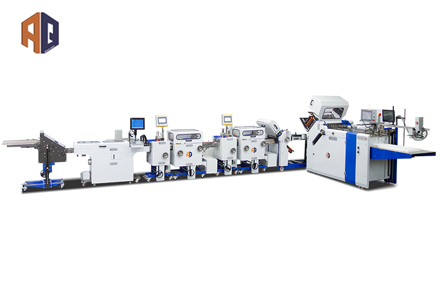
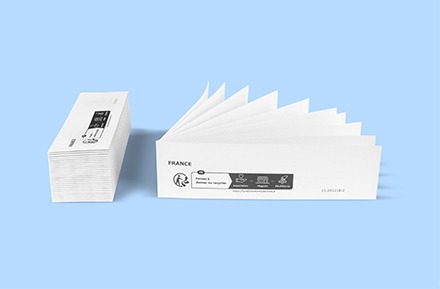
Paper folding machines are widely used in printing, mailing, publishing, and packaging industries. Yet many buyers—especially first-time purchasers—are surprised by their price. This leads to one of the most searched industry questions: Why are paper folding machines so expensive?
The short answer is simple: paper folding machines are precision-engineered production equipment, not basic office tools. The long answer involves automation technology, mechanical accuracy, durability, production capacity, and long-term business value.
Breaking Down the Cost of Paper Folding Machines
The cost of a paper folding machine is influenced by far more than its physical size. Key cost drivers include:
Precision Mechanical Design
Paper folding machines must maintain perfect alignment at high speeds. Feed rollers, folding plates, bearings, and drive systems are engineered with tight tolerances to prevent skewing, wrinkling, or double-feeding—especially during continuous operation.
Intelligent Control and Automation
Modern machines integrate PLC controllers, sensors, servo motors, and digital interfaces. These systems automatically adjust folding speed, detect errors, and ensure accurate folding without constant operator intervention.
Durable Industrial Materials
Unlike basic office equipment, folding machines are built for longevity. Heavy-duty frames, hardened rollers, and abrasion-resistant components ensure stable performance even under heavy daily workloads.
Engineering, Testing, and Compliance
Manufacturers invest heavily in R&D to support different paper sizes, thicknesses, and fold patterns. Machines also undergo extensive testing to meet safety, electrical, and operational standards.
Service Infrastructure and Brand Reliability
High-quality machines often come with professional installation, training, documentation, and global service support. This reliability adds to the upfront cost but reduces downtime and maintenance risks.
The Value of a Paper Folding Machine for Businesses
Although paper folding machines are expensive upfront, they deliver long-term value:
♦ High-speed paper folding for mass production
♦ Reduced labor costs and staffing dependency
♦ Consistent, professional folding quality
♦ Lower waste from misfolded sheets
♦ Faster turnaround times for print jobs
For print shops, mailing houses, and in-house production departments, a paper folding machine is a profit-generating asset, not an expense.
Different Types of Paper Folding Machines
Choosing the right type of paper folding machine directly impacts both cost and performance.
Desktop Paper Folding Machines
♦ Best for small offices
♦ Lower speed and capacity
♦ Affordable entry-level option
Friction Feed Paper Folding Machines
♦ Ideal for standard paper
♦ Common in small and mid-size print shops
♦ Balanced cost-performance ratio
Air Feed Paper Folding Machines
♦ Use air suction for sheet separation
♦ Handle coated, lightweight, or recycled paper
♦ Higher precision and higher price
Industrial Paper Folding Machines
♦ Designed for high-volume production
♦ Continuous operation capability
♦ Highest cost but maximum efficiency
Key Features of High-End Paper Folding Machines
Advanced paper folding machines often include:
♦ Variable speed control
♦ Multiple programmable folding patterns
♦ Automatic jam and double-sheet detection
♦ Wide paper size and paper weight compatibility
♦ Quiet, vibration-reducing operation
♦ Modular and upgradeable design
Each added feature increases complexity—and cost—but improves reliability and output quality.
Understanding the Different Types of Folds Your Paper Folding Machine Can Make
Fold versatility is a major price factor. Common paper folding styles include:
♦ Half Fold – newsletters, booklets
♦ Letter Fold (Tri-Fold) – brochures, mailers
♦ Z-Fold – manuals, instruction sheets
♦ Gate Fold – premium marketing materials
♦ Double Parallel Fold – compact mailing pieces
♦ Accordion Fold – expandable layouts
Machines that support multiple fold types require adjustable folding plates and advanced control logic, increasing their cost.
Top 10 Best Paper Folding Machines in 2026
Below are industry-recognized paper folding machines expected to remain top performers in 2026, based on reliability, performance, and market demand.
1. Martin Yale 1611 Desktop Paper Folding Machine
Best for: Small offices
Compact, affordable, and easy to use for low-volume folding tasks.
2. Formax FD 38X Paper Folding Machine
Best for: Mid-size offices
Reliable friction-feed folder with adjustable fold settings.
3. Pitney Bowes DF1000 Folding Machine
Best for: Office mailing operations
Designed for invoices, statements, and transactional documents.
4. MBM 20M Paper Folder
Best for: Growing print shops
High-speed folding with digital controls and wide paper compatibility.
5. 780TS Combi paper Folding Machine
Best for: Commercial environments
Known for durability and consistent performance.
6. Dynafold Pro DF-1200 Paper Folder
Best for: Professional production
Handles multiple fold types with automatic paper adjustment.
7. Standard Horizon PF-P3100 Paper Folder
Best for: Industrial print finishing
High-speed, air-feed system for premium print quality.
8. MBM 260M Paper Folding Machine
Best for: Commercial print shops
Combines speed, reliability, and ease of setup.
9. 360T/480T Automatic paper folding machine
Best for: Large offices and production departments
Touchscreen control and automatic paper detection.
10. MBM 352S Paper Folder
Best for: Small to mid-size businesses
Cost-effective solution with professional-grade performance.
Conclusion
Paper folding machines are expensive because they are designed to deliver precision, speed, durability, and consistency in demanding production environments. Their cost reflects not only the machine itself, but also the engineering expertise, reliability, and long-term productivity they provide.
For businesses that depend on professional folding results, investing in a quality paper folding machine is a strategic decision that supports efficiency, quality, and growth.
FAQ
Q1: Can small businesses justify the cost of a paper folding machine?
Yes. Entry-level and desktop machines offer excellent value for small businesses with regular folding needs.
Q2: What makes industrial paper folding machines more expensive?
They are built for high-speed, continuous operation using stronger materials and more advanced automation.
Q3: Do paper folding machines require skilled operators?
Most modern machines are user-friendly, but training helps maximize efficiency and reduce setup time.
Q4: How often does a paper folding machine need maintenance?
Routine cleaning and periodic inspections are usually sufficient to keep the machine running smoothly.